CENTER FOR RESILIENT SCHOOLS AND COMMUNITIES
WHAT’S THE CONNECTION WITH SAM?
SAM’s Center for Resilient Schools and Communities advances SAM’s mission by strengthening the systems and supports that help students, families, neighborhoods, and schools succeed academically and thrive over time.
The Center works in partnership with schools and community organizations to provide practical tools and strategies that support individual and community resilience. This capacity-building approach directly supports SAM’s long-standing focus on improving academic outcomes and strengthening pathways to postsecondary education and workforce participation.
For more than a decade, SAM has analyzed local data and research to better understand the conditions that influence student learning and long-term success. Academic achievement is closely connected to economic mobility and overall life outcomes. The Center for Resilient Schools and Communities supports educators and nonprofit organizations that serve youth and children.
HOW WE DO IT:
CRSC is an approved provider for continuing education by the SC Professional Counselors, Marriage and Family Therapists
and Psycho-Educational Specialists licensing board.
EVIDENCE-BASED TRAINING
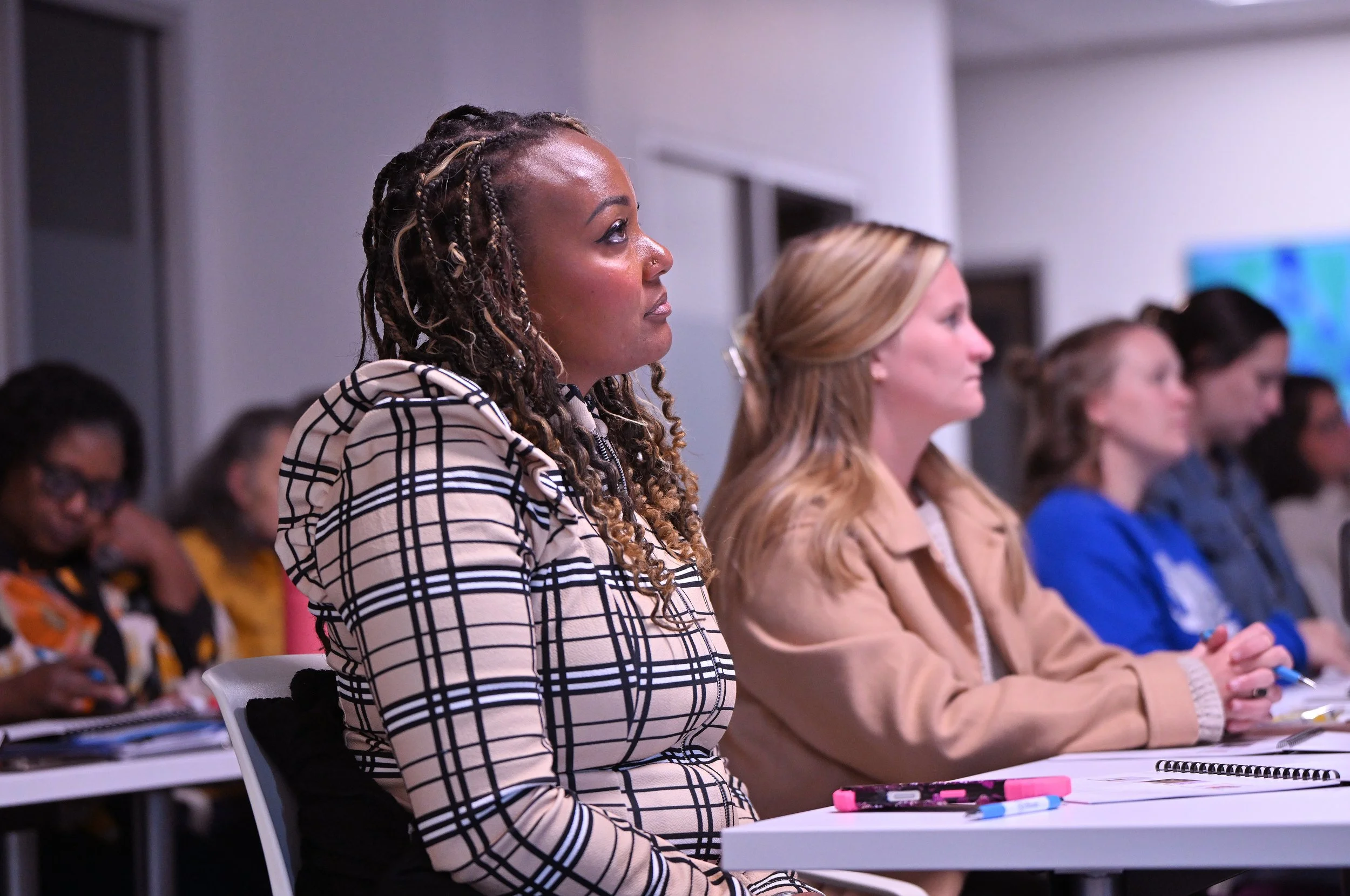
The Center for Resilient Schools and Communities provides evidence-based professional development through workshops and group training designed to strengthen learning environments, support student well-being, and enhance organizational effectiveness.
DESIGNED FOR:
Educators
Law Enforcement
Psychologists
School Resource Officers
Counselors
Social Workers
Parents/Caretakers
Caseworkers
Community Leaders
Non-Profit Organizations
Out-of-School Time Child/Youth Program Providers
Healthcare Providers
Business Leaders
TRAINING TOPICS INCLUDE:
Understanding and responding to adverse and stressful life experiences
Strengthening protective factors and supportive relationships
Mandatory reporting requirements and best practices
Foundations of trauma-informed practice
Brain development and its impact on learning and behavior
Strategies for managing stress and supporting professional well-being
Building resilience in children, youth, and families
Creating safe, supportive, and predictable environments
Social media risks, trends, and healthy technology use
Substance use awareness and the role of connection
Effective behavioral response strategies
Practical coping and self-regulation skills
Recognizing and responding to abuse and neglect
Leadership practices that support healthy organizations and teams
2026 Training Dates
Technical Assistance
CRSC trainings provide ongoing, tailored support for schools and community partners to implement resilience-building strategies effectively. Our support goes beyond initial training and offers guidance on applying best practices, solving implementation challenges, strengthening systems and processes and using data to drive continuous improvement. Through coaching, resource sharing and collaborative problem-solving, technical assistance ensures training translates into sustainable action to foster safe, supportive and resilient environments for all learners.
Community Engagement
CRSC trainings focus on collaboration with families, business, and local organizations to build healthy environments to support resilience and well-being. This process requires community voices and using local data to identify needs and priorities so training topics are relevant and actionable. By integrating community input with evidence-based practices, CRSC fosters trust, shared responsibility, and sustainable strategies to strengthen and support communities.
Level One: Core
Foundational training to build awareness around trauma and resilience
-
This essential, full-day foundational training is the cornerstone offering from the Center for Resilient Schools and Communities. Participants will explore key concepts of a trauma-informed framework that includes Adverse Childhood Experiences (ACEs), Hidden Influences in Decision Making, Resilience, and Self-Care. The course is designed to increase knowledge of ACEs, the path to resilience, and the critical role of self-care in fostering personal and professional well-being. The training equips individuals and teams with the knowledge and tools to support healthier, more resilient school and community environments.
-
6–30 people
-
6 credits
-
None
-
October 14, 2026
Click here to register.
December 9, 2026
Click here to register.
January 13, 2027
Click here to register.
March 3, 2027
Click here to register.
June 9, 2027
Click here to register.
Level Two: Prevention
Training focuses on understanding risk and protective factors in trauma prevention
-
This three-hour interactive training builds on the foundational concepts introduced in Level I. Participants will deepen their understanding of trauma by exploring key behavioral indicators and learning how to recognize and respond with empathy and intention. The training emphasizes the role of protective factors and positive childhood experiences (PCEs) in fostering resilience. Through discussion, reflection, and applied learning, attendees will learn trauma-informed behavioral responses that support healing and growth.
By the end of the session, each participant will leave equipped with a personalized resiliency toolkit—a practical resource to support trauma-sensitive practices in their work and communities.
-
6–30 people
-
3.5 CEUs
-
Completion of Level One
-
October 7, 2026
Click here to register.November 11, 2026
Click here to register.
February 10, 2027
Click here to register.
March 31, 2027
Click here to register.
July 14, 2027
Click here to register.
Level Three: Awareness
Advanced training to deepen trauma understanding
-
As the newest addition to our training series, Level III: Awareness was developed in response to critical issues identified by the community. This 4.5 hour session features presentations focused on timely and pressing topics, including the impact of addiction and available prevention resources, dangers of social media, and the often-overlooked signs of abuse. Participants will gain knowledge and skills to recognize and respond to these complex challenges within their schools and communities.
-
6–30 people
-
5 CEUs
-
None
-
School Counselor Training: Strenghtening Systems, Supporting Students
September 16, 2026
Click here to register.


Full-Service Community Schools
“When we connect families to high-quality early learning through our Full-Service Community School, we’re not just preparing children for kindergarten -we’re setting the foundation for lifelong success. Every child deserves that strong start.”
Spartanburg Success Pipeline
Spartanburg Academic Movement (SAM) is proud to lead a transformative $15 million, five-year investment through the Full-Service Community Schools (FSCS) Grant. This initiative is designed to surround students and families in Spartanburg School Districts 3 and 7 with the support they need to thrive in school and beyond.
In partnership with local organizations and agencies, SAM is working with four elementary schools and two middle schools to deliver comprehensive wraparound services aligned with four key pillars:
Integrated Student Supports — including access to mental health services, a mobile health clinic, and classroom coaching.
Expanded Learning Time and Opportunities - offering high-quality afterschool enrichment programs and new 3K early childhood classrooms.
Active Family and Community Engagement — supported by Family Navigators and site coordinators to build strong school-home-community partnerships.
Collaborative Leadership and Practices — through continuous improvement training and shared decision-making across school communities.
The FSCS model turns schools into neighborhood hubs where children and families can access the full range of resources needed for success. From health care to early education, after-school programs to family engagement, this is what it looks like when a community comes together for its children.
FSCS has site coordinators at the following schools: Cowpens Elementary School, Pacolet Elementary School, Mary H. Wright Elementary School, Cleveland Academy of Leadership, Carver Middle School, and Clifdale Middle School.
Partner Organizations Include:
Benjamin E. Mays Family Center, Bethlehem Center, Bloom Upstate, City of Spartanburg Parks and Recreation Department, Emerge Family Therapy, My Brother’s Keeper, Northside Development Group, Quality Counts, and ReGenesis Healthcare.
Together, we are building brighter futures—one student, one family, one school at a time.
Promise Neighborhoods
“This grant draws from previous work by the community focusing on youth services, high-quality educational programming and health and wellness. It’s centered on laying a greater foundation for generational change.
”
SAM awarded $945,308 for Southside Blueprint Initiative
The U.S. Department of Education has awarded Spartanburg Academic Movement (SAM) $945,308 over two years through the Promise Neighborhoods program. SAM was one of seven organizations in the United States to receive a collective $7 million in grant funding.
SAM’s grant will support students and families in the Southside of Spartanburg, providing essential resources to improve educational outcomes and strengthen community well-being.
The Southside Promise Blueprint initiative will focus on four key schools in Spartanburg School District 7: Mary H. Wright Elementary, E.P. Todd Elementary, Carver Middle School, and Spartanburg High School. The initiative aims to improve student achievement, enhance family supports, and foster a stronger community.
Specifically, the grant will support early childhood education with family navigation services to ensure children enter school ready to learn, student progression programs to enhance student engagement and transitions through school, dual enrollment opportunities, and work-based learning programs and internships for high school students. The grant includes family and community engagement initiatives including the Strengthening Families program to support families and reduce behavioral challenges and mental health supports through service access to address trauma and adverse childhood experiences (ACEs). The grant will establish a youth advisory council to incorporate community voices into decision making and provide rapid-resource microgrants to local organizations meeting immediate community needs.
This grant represents a collaborative effort to integrate education, health, and social services that will help families and build brighter futures. The initiative will track progress through key metrics, including improved school readiness, higher attendance rates, and increased family engagement.
“This grant is a testament to what’s possible when a community comes together with a shared vision and a common agenda to support children and families,” said Dr. Russell Booker, Chief Executive Officer of Spartanburg Academic Movement. “This grant draws from previous work by the community focusing on youth services, high-quality education program and health and wellness. It’s centered on laying a greater foundation for generational change. Collectively, we are creating a brighter future for our students, families, and the entire community.”
The initiative is rooted in collaboration with local stakeholders including SAM, the City of Spartanburg, Spartanburg School District 7, Mt. Moriah Baptist Church, Strategic Spartanburg, South Converse, Liberty Heights, Forest Park Neighborhood Associations, and the other place-based organizations on the Southside.
Dr. Larry Crudup, Pastor of Mt. Moriah Baptist Church, an integral partner in the initiative, expressed the church’s enthusiasm for joining this effort. “Mt. Moriah has long been a cornerstone of the Southside community and its schools. This grant aligns with our history of service and our mission to ignite hearts, engage humanity, and transform lives. We are honored to play a role in building a brighter future for the children and families of this community.
Other communities awarded Promise Neighborhood grants this year include Austin Voices for Education and Youth, Austin, Texas, Jubilee Park and Community Center Corp., Waco, Texas, Oakland Promise, Oakland, CA, United Way of Central Alabama, Inc., Birmingham, Ala., The Pritchard Committee for Academic Excellence, Lexington, KY and Indian Township of Tribal Government, Princeton, Maine.
Read More