
From Bright Spots to Better Systems
In our first blog, we shared why SAM and Clemson University chose to study local literacy bright spots. We wanted to move beyond naming disparities and learn from schools where third graders living in poverty were achieving strong literacy outcomes. The report points to a clear lesson: promising practices already exist here, and they can become a starting point for collective learning.
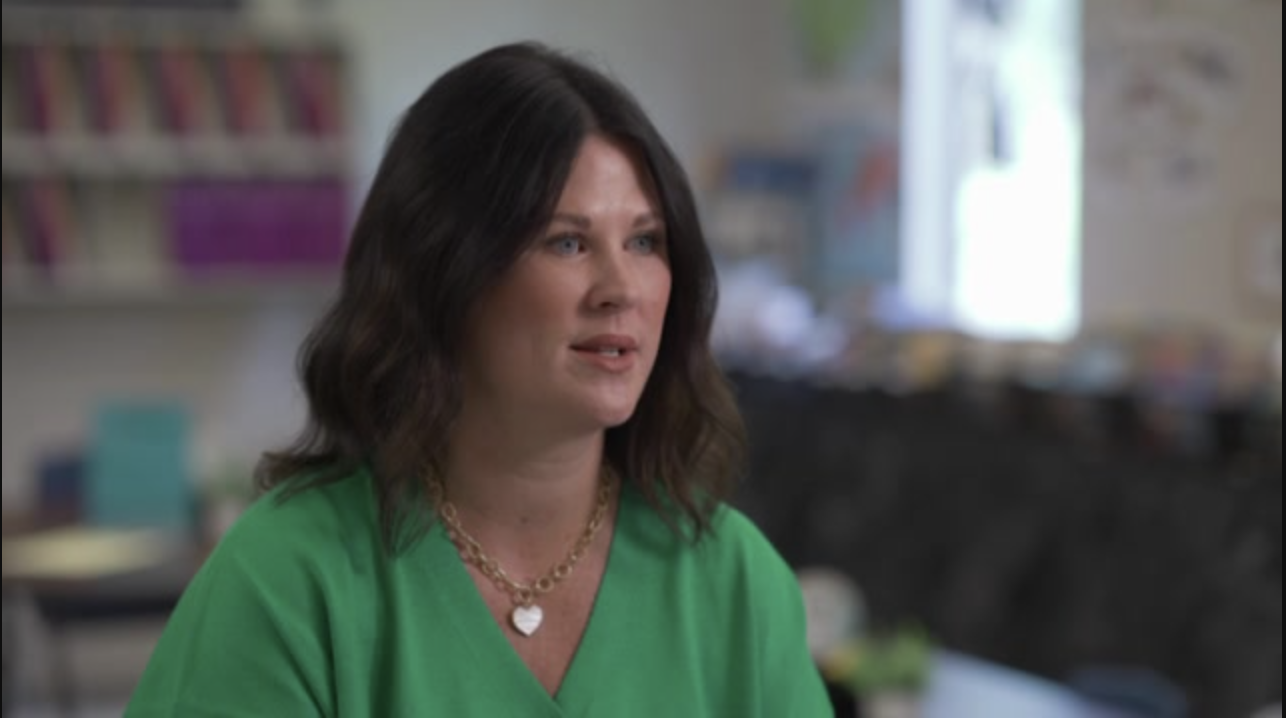
Holly Springs-Motlow Elementary Reading Interventionist Kaity Foster explains how educators have taken strategies and applied them to create an authentic, nurturing learning environment.
Across seven bright spot schools, educators described four recurring change concepts:
Increasing student access to rigorous texts
Making intervention flexible and responsive
Maintaining high expectations for literacy participation
Strengthening strategic, standards-aligned literacy planning and collaboration
A change concept is a broad principle that can guide improvement across different settings. It is not a prescribed program or a checklist. A change idea is the specific action a team might try to put that concept into practice. For example, a school interested in increasing access to rigorous texts might test a new scaffold, planning routine, or grouping approach while monitoring what students experience and learn.
The consistency across schools was encouraging. The findings show that strong literacy experiences are shaped across the system. Teachers create meaningful opportunities for students to read, write, discuss, and think. School leaders protect time, build routines, and support collaboration. Districts provide coherent guidance, resources, professional learning, and flexibility. Improvement becomes more possible when those roles reinforce one another.
The report also offers a practical way to begin. Its push-pull activity asks teams to choose a change concept and consider what teachers, interventionists, schools, and districts need to do and need from one another. This helps shift the conversation from pushing solutions onto educators to designing supports around the needs voiced by people closest to students.
The goal is not to copy a bright spot or assume the findings are a finished answer. The goal is to generate a change idea, test it on a small scale, study what happens, and refine it based on evidence and experience. That is how local insight becomes local improvement.
The Wardlaw Center for Improvement Science is ready to learn alongside educators, school teams, and district leaders who want to take that next step in reducing disparities. By engaging in a Breakthrough Series Collaborative (BSC) in early 2027, we can bridge the gap between research and daily classroom or district practice by bringing multiple school teams together in a structured, short-term learning network to achieve rapid, measurable improvements. Together, we can turn the report’s concepts into context-specific ideas, practical measures, and disciplined tests of change that strengthen literacy experiences for more students across Spartanburg County.
Choose one change concept, complete the push-pull activity in the report, and connect with the Wardlaw Center to design and test a change idea. Connect with us at WardlawCenter@learnwithsam.org